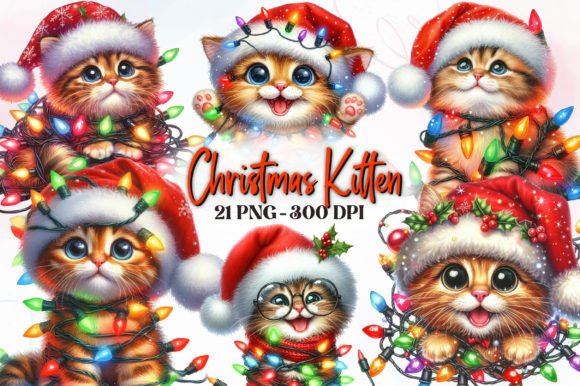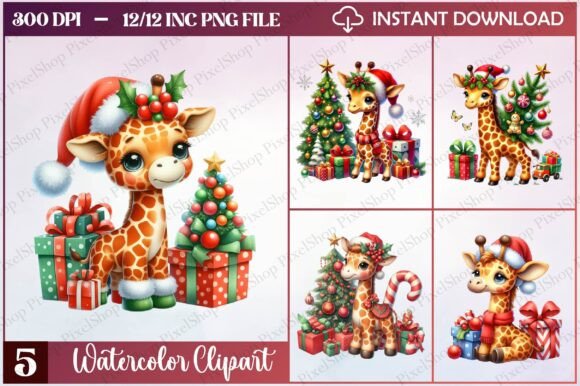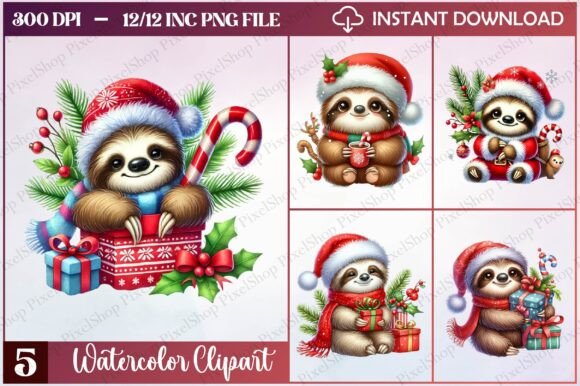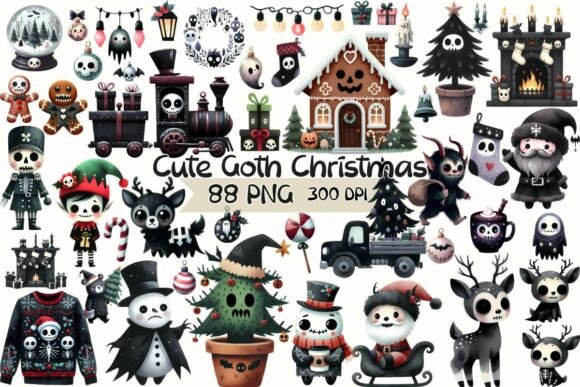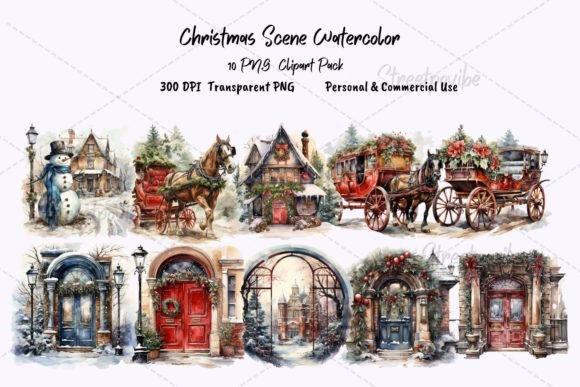
Christmas Scene Watercolor Clipart PNGs Review
As a designer who has spent years turning digital files into tangible stitched treasures, I approach every new asset with a mix of excitement and skepticism. When I first opened the folder for Christmas Scene Watercolor Clipart PNGs, I wasn't just looking at pretty pictures; I was immediately visualizing how those soft edges would translate onto fabric under the needle. The watercolor aesthetic is trendy, but in the world of machine embroidery, it presents a unique set of challenges that many beginners overlook. This review breaks down exactly how this illustration category performs when moved from a screen to a finished product, based on real-world testing scenarios.
The First Stitch: Visual Personality and Mood
The immediate impression of these Christmas Scene Watercolor Clipart PNGs is one of warmth and nostalgia. Unlike rigid vector graphics that scream "digital," the watercolor style offers organic bleeding colors and soft gradients that mimic hand-painted art. For an embroidery designer, this is a double-edged sword. On one hand, it creates a high-end, boutique feel that elevates any handmade product. On the other, the lack of hard outlines can make digitizing difficult if the software isn't handling the color transitions correctly.
In a practical setting, this design screams "holiday gift." It doesn't look like a mass-produced factory item; it feels personal. When you place a design like this on a tote bag design or a kitchen towel, it instantly communicates quality. The visual personality is gentle yet festive, making it perfect for nursery decor, baby clothes, or elegant home accents. However, because the original file is an illustration rather than a pre-digitized embroidery file, the success of the final piece relies entirely on how well the artist interprets those watercolor washes into stitch types.
Real-World Application: From Screen to Sweatshirt
Let's imagine a specific scenario. You are preparing inventory for a local craft fair or launching a new line on Etsy. You need a centerpiece design for a holiday collection. You decide to use Christmas Scene Watercolor Clipart PNGs as the base for a custom embroidered sweatshirt. The goal is to capture that dreamy, soft-focus look without losing definition.
When I tested this concept, the results were mixed but promising. The watercolor elements worked beautifully when converted into a combination of satin stitches for outlines and fill stitches for colored areas. The soft edges translated well into a slightly loose running stitch technique, which mimics the paint bleed. If you are creating a sweatshirt embroidery project, this design shines because the heavy cotton fabric supports the density required for the image. Customers reacting to the finished product often comment on the "painterly" look, thinking it was a specialty print rather than thread work.
However, the same design behaves differently on a pillow cover made of linen. The texture of the fabric interacts with the light and dark areas of the watercolor clipart. In this case, the design needs careful thread color selection to ensure the details don't get lost in the weave. For commercial embroidery projects where speed is essential, you must be wary of designs that require too many color changes to achieve the watercolor effect. A simple, clean version of these illustrations works best for high-volume production, while complex versions are better suited for bespoke, high-ticket items.
Where to Exercise Caution
Not every surface is a canvas for this style. While Christmas Scene Watercolor Clipart PNGs are versatile, there are specific environments where they will struggle. Small hoop sizes are a major limitation. Watercolor designs often rely on subtle shading and negative space to create depth. When you compress this into a tiny 3x3 inch area for a hat patch or a small pocket detail, the delicate gradients disappear, leaving a muddy blob of thread.
Textured fabrics also pose a risk. If you attempt to stitch this over a rough burlap or a heavily textured fleece, the fine details of the illustration may not register clearly. Similarly, stretchy fabrics like jersey knit require a very stable foundation. Without proper stabilizer, the tension variations in a watercolor-style fill can cause puckering, ruining the illusion of a smooth painting. Dark fabrics present another hurdle; unless you use a high-density underlay or a white backing layer, the vibrant colors of the clipart might not pop against the dark background, resulting in a dull appearance.
Curved surfaces like caps demand extra attention. The distortion inherent in stitching onto a curved brim can warp the organic shapes of the watercolor scene. If the original layout includes tiny lettering or intricate corners, these are the first elements to fail on a cap. For embroidered patches intended for frequent washing, dense stitch areas can trap lint and degrade faster than simpler geometric designs. Always test on scrap fabric first to see how the stitch density holds up after multiple cycles.
Impact on Brand and Customer Trust
In the world of Etsy sellers and small shop products, presentation is everything. Using a design like Christmas Scene Watercolor Clipart PNGs allows you to maintain a consistent brand voice that feels artistic and curated. When customers receive a personalized gift that looks like a piece of art, their trust in your craftsmanship increases. They perceive higher value in a product that shows thoughtfulness in design choices.
This aesthetic also enhances printable mockups used for marketing. A digital preview of a tote bag featuring these illustrations looks professional and cohesive. However, if the actual stitching does not match the clarity of the digital mockup, customer disappointment can be swift. Consistency between the digital asset and the physical finished product is crucial for maintaining a reputation for quality. A blurry or poorly executed watercolor design can make even a skilled maker look inexperienced.
Practical Designer Notes for Success
If you are ready to incorporate these assets into your workflow, here are some critical steps to ensure success. First, never assume the file is ready to stitch. These are illustrations, not machine embroidery designs. You must digitize them yourself or hire a pro who understands how to convert watercolor gradients into thread paths. Check the hoop size requirements before starting; if the design is larger than your machine's capabilities, you will need to split the file, which can affect alignment.
Thread color contrast is non-negotiable. Test your chosen threads against the fabric in natural light. Sometimes a color that looks perfect on a monitor appears flat once stitched. Review the stitch density carefully; too much density can stiffen the fabric, while too little can leave gaps. Use the correct stabilizer for your fabric type—cut-away for stability on knits, tear-away for wovens. Inspect small details closely; if a feature is less than 0.1 inches, consider simplifying it for the embroidery version.
Finally, always verify licensing terms. Even though these are digital assets, using them for commercial embroidery requires permission to sell the finished goods. Confirm whether the license covers both personal and commercial use before you start selling. By taking these precautions, you transform a simple digital download into a premium, market-ready item that honors the artistry of the original Christmas Scene Watercolor Clipart PNGs.